When purchasing stainless steel cutlery wholesale, high-end gifts, or supplies for the hospitality and food service industries, many buyers focus solely on appearance and price quotes, blindly pursuing the lowest price while neglecting material quality, polish grade, and suitability for actual usage scenarios. This approach can lead to two common problems: Either the materials and specifications are excessively high-end, resulting in persistently high retail prices and slow-moving inventory; or costs are cut too aggressively, leading to poor base materials and subpar polishing and craftsmanship, with sharp burrs on the cutlery edges that can scratch the mouth during use and trigger a flood of customer complaints. Therefore, let’s briefly outline the characteristics of each material to serve as a reference for buyers when selecting products.
The mainstream stainless steel materials used for cutlery on the market include 201, 410, 430, and 304. These materials differ significantly in performance and are paired with different polishing grades depending on market positioning and demand.
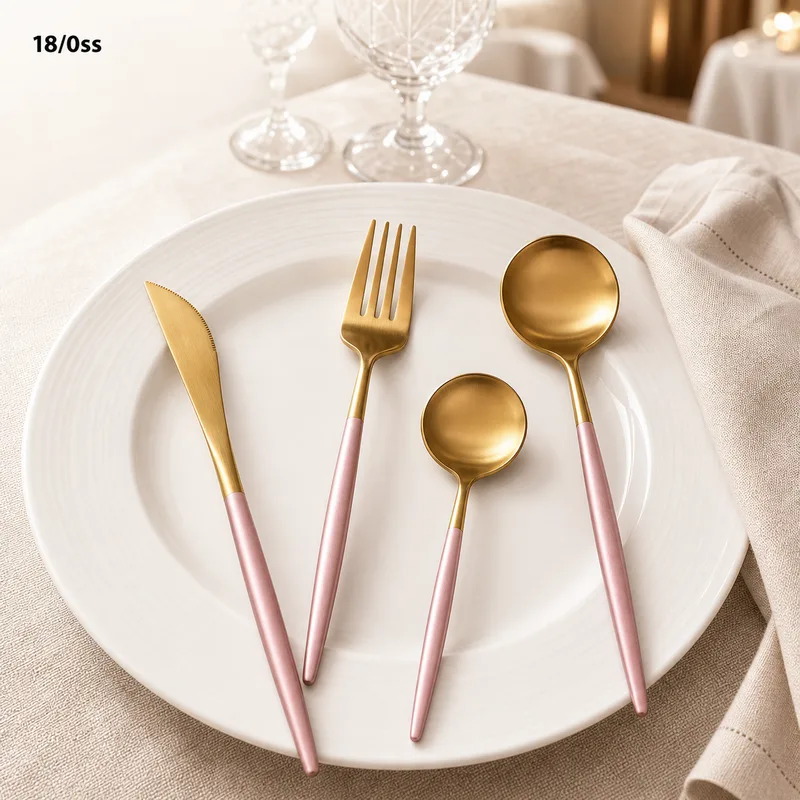
- Stainless steel 201: this material has relatively poor rust resistance and is prone to rust spots in humid or coastal environments. This material is typically finished with a mirror polish and treated with a PVD coating—such as gold, rose gold, blue, or black—and is quite popular in the Middle Eastern market.
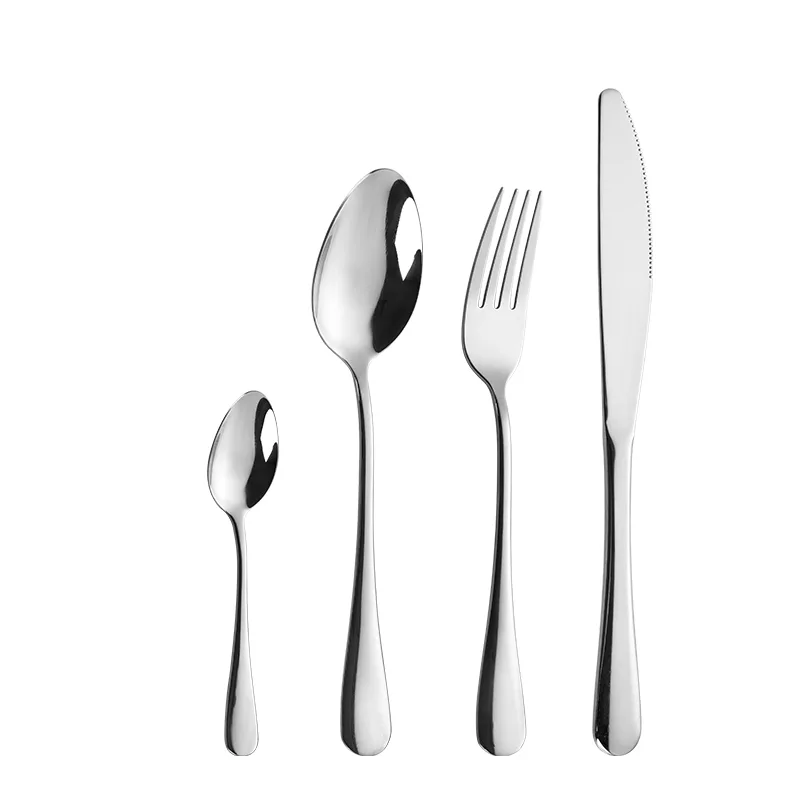
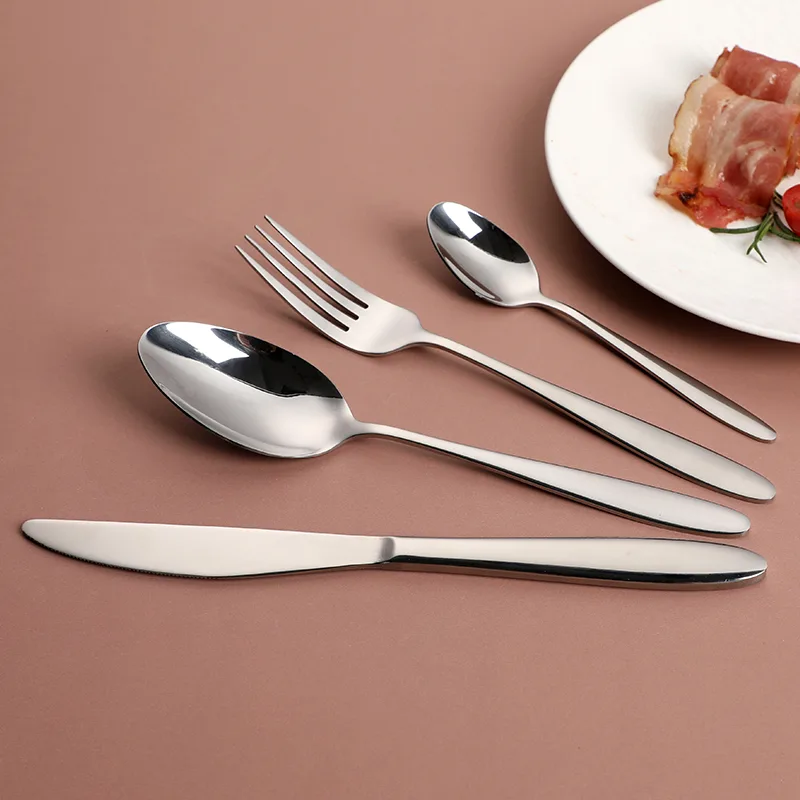
- Stainless steel 410: it is a martensitic stainless steel characterized by high hardness and excellent sharpening performance, making it a preferred material for table knives. It offers moderate rust resistance. It can be finished with the mirror polish commonly used in the market, or processed to achieve a matte finish. Considering its overall craftsmanship and performance, it is well-suited for casual dining restaurants, home use, and affordable 4-piece and 16-piece cutlery sets sold in supermarkets.
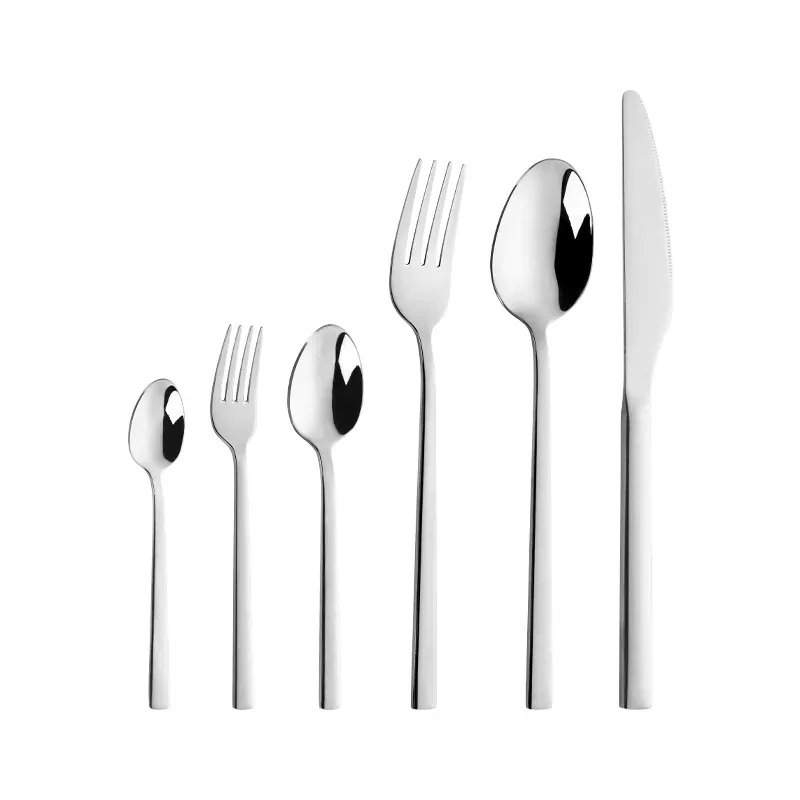
Stainless steel 430: 430 is a nickel-free ferritic stainless steel. Its purchase cost falls between that of 410 and 304, and it offers better corrosion resistance than 410 but not as good as 304. In the European and American markets, it is commonly used in mid-range household cookware sets, moderately priced gifts, and general food service applications. It is typically finished with a mirror polish or a matte finish and is suitable for regular dishwasher use.
Stainless steel 304: it is a food-grade austenitic stainless steel with outstanding rust resistance. It can withstand repeated high-temperature washing in dishwashers and remains reliable even in humid coastal regions. It is widely used in high-end hotels, upscale Western restaurants, and premium gift shops, and is commonly available in 4-piece, 16-piece, and 24-piece gift sets for Mother's Day.
Many importers and wholesalers often encounter various avoidable issues when placing large orders. Below are the risks to be particularly vigilant about during the procurement process:
1. Do not compare products based solely on their appearance in photos. Even items with the same appearance can vary significantly in cost depending on the base material, polish, and edge finishing.
2. Do not blindly pursue ultra-low quotes without verifying the actual material grade. Inferior materials can lead to customer complaints regarding widespread rust, burrs, and scratches.
3. Match the product to its intended use: For frequent use in commercial dishwashers, avoid grades 201 and 430, as they are prone to rust. If you’re looking for sharp steak knives, the dinner knives must be made of 410 steel; do not use an all-304 set, as 304 steel is difficult to sharpen to a razor-sharp edge for dinner knives.
Overall, when purchasing stainless steel cutlery, cheaper isn’t necessarily better, nor is a higher-grade material always the best choice. By considering your brand positioning and intended use scenarios, and taking a comprehensive look at the material, polishing process, and safety treatment of edges and corners, you can strike a balance between cost, quality, and user experience. This approach not only helps control production costs but also effectively prevents post-sale customer complaints regarding rust or scratches, ensuring your products remain competitive in the market over the long term.
Need OEM/ODM Flatware Support?
Share your product type, finish, material and quantity requirements. Our factory team will help with quotation and catalog support.

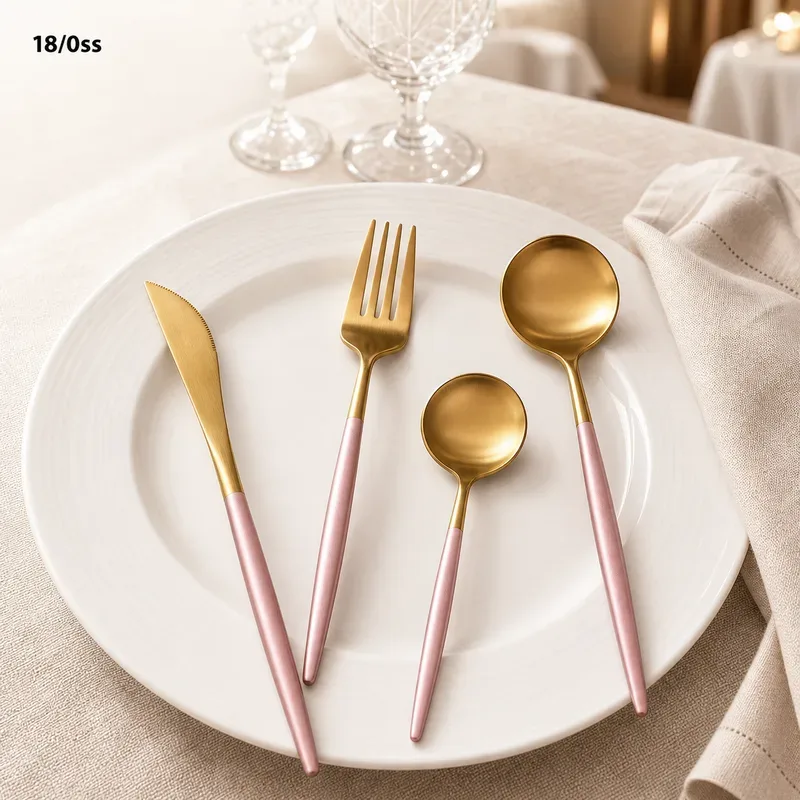
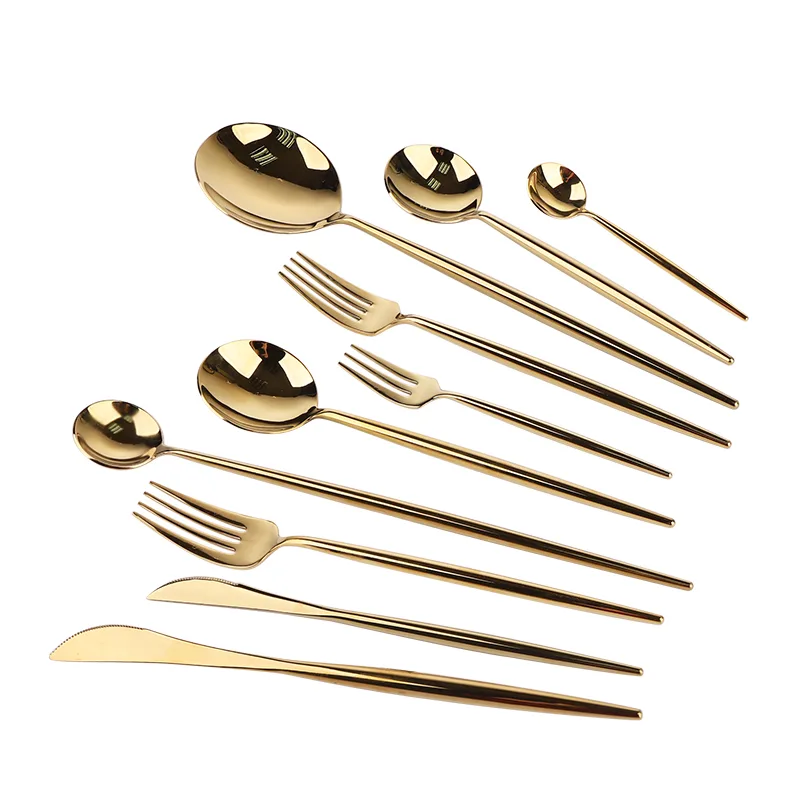 40 Pcs Gold PVD Stainless Steel Cutlery Set Luxury Long Handle Knife Fork Spoon Flatware Set Wedding Hotel Tableware Silverware Set
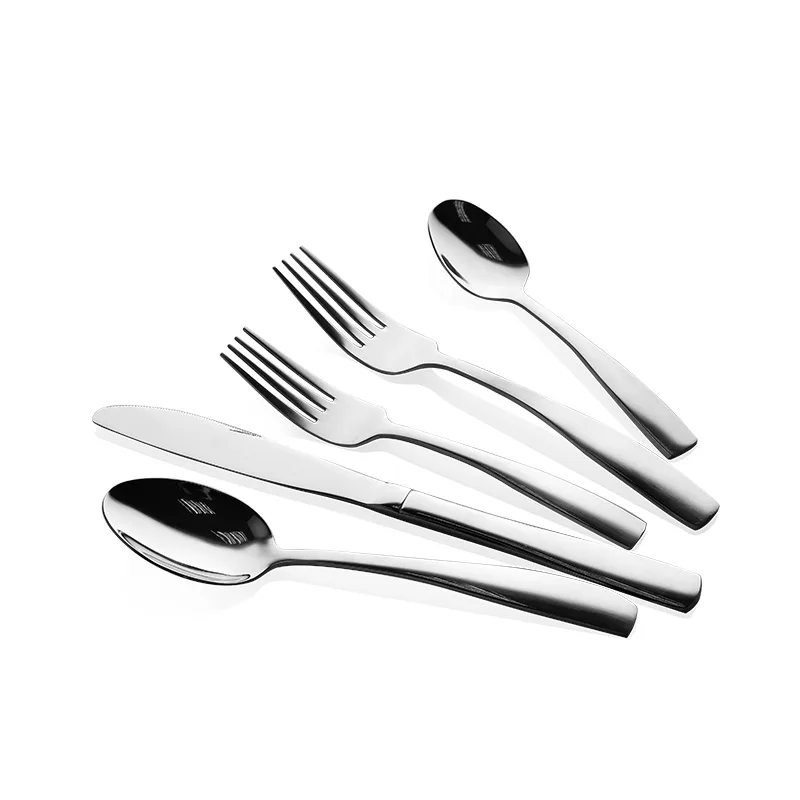 Jieyang Cutlery Factory 410ss Mirror Polish 20 Pieces Flatware Set For USA Market
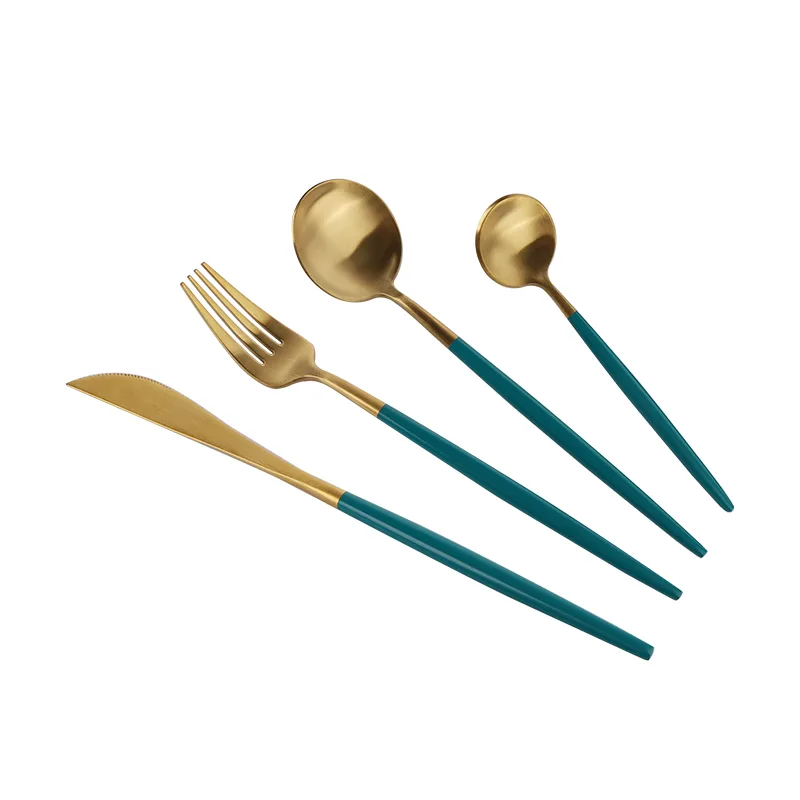 Green Handle Nordic Style 16pcs Flatware Set with Round Spoon
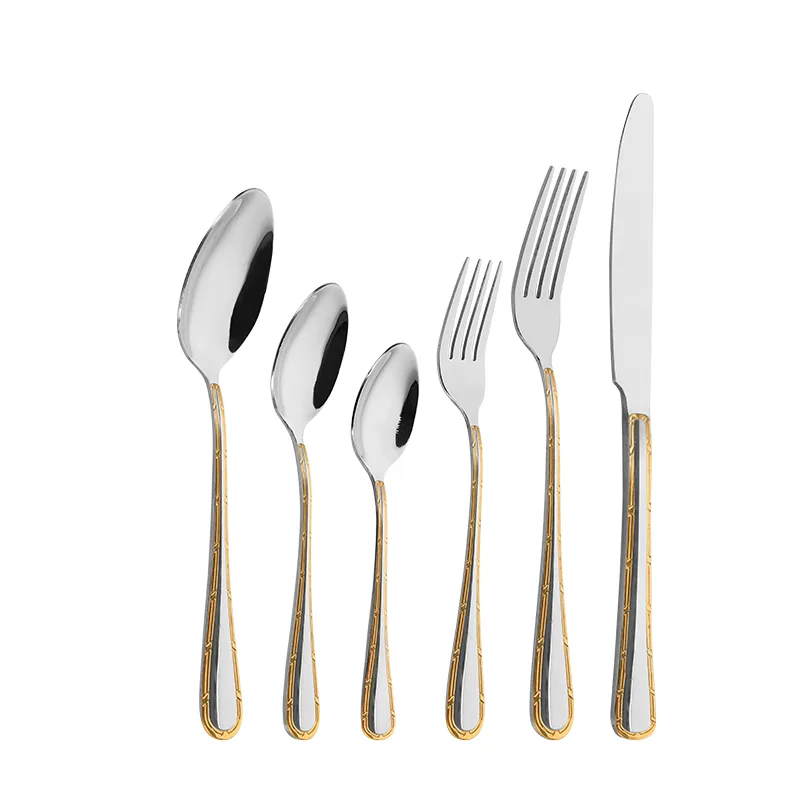 Wholesale Stainless Steel Gold‑Stripe Handle Cutlery Set for 5 People